
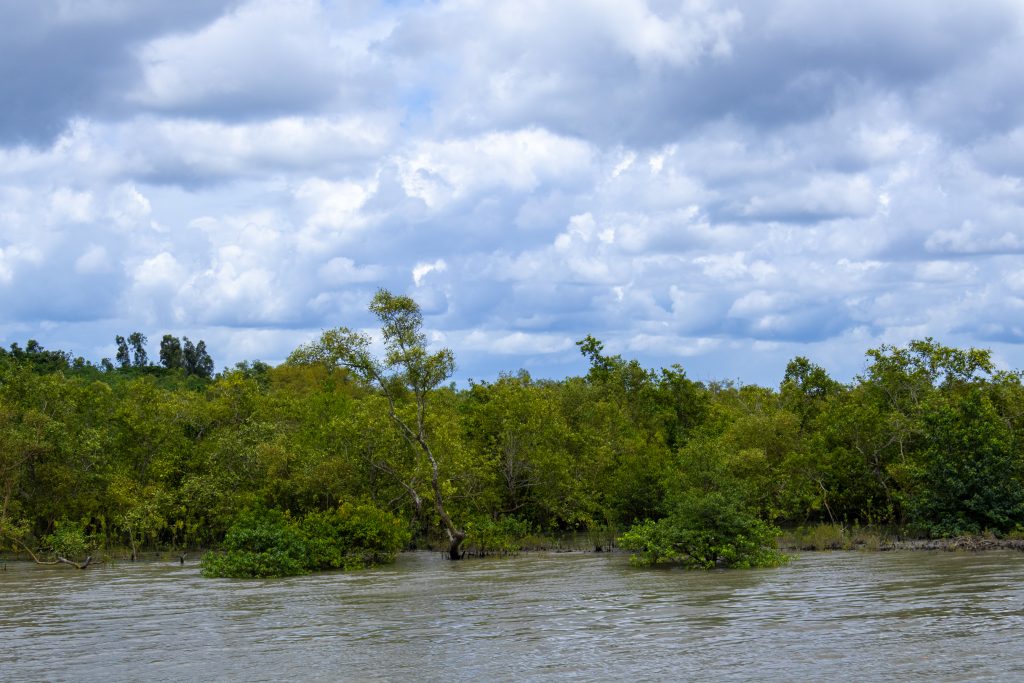
Sundarban wildlife extends well beyond the Royal Bengal Tiger that draws most visitors in the first place — the delta’s mangrove forests and waterways support one of the most varied ecosystems in eastern India, and a boat safari reliably turns up several species even on days without a tiger sighting.
Birdlife is genuinely abundant: kingfishers, including the striking brown-winged kingfisher, are common along the creeks, and the white-bellied sea eagle is a frequent sight circling above the wider river channels. Migratory species pass through in winter, making October to March as good for birdwatching as it is for the safari season generally.
Saltwater crocodiles, among the largest crocodilian species in the world, are commonly seen sunning on the mudbanks near watchtowers such as Sudhanyakhali, and water monitor lizards, sometimes over a metre and a half long, are a regular sight along the same creek edges.
Irrawaddy dolphins occasionally surface in the broader river channels, though sightings are less predictable than the more commonly spotted spotted deer and wild boar, both of which graze in open clearings visible from the watchtowers. Rhesus macaques are also common near the forest edges, particularly around areas with visitor foot traffic.
The mangrove forest itself is worth noticing as much as the animals within it — the Sundarbans form the largest mangrove forest in the world, and the trees’ distinctive aerial roots, adapted to the delta’s daily tidal flooding, are unlike anything most visitors have seen in a forest before.
Chandrawanshi Tour & Travels’ Sundarban ecotourism package is built around this wider wildlife and mangrove experience rather than a tiger-only focus, with licensed guides who can point out species most first-time visitors would otherwise miss — see our full Sundarban tour packages for options.